Hunters in the Snow: A Comprehensive Exploration
Bruegel’s “Hunters in the Snow” is explored within modern poetry, alongside Wolff’s short story collection, and London’s “Keesh,” offering diverse interpretations.
Pieter Bruegel the Elder’s “Hunters in the Snow” – Historical Context
Painted in 1565, “Hunters in the Snow” emerges from a specific historical milieu – the Northern Renaissance in Flanders. Commissioned as part of a series depicting the Labors of the Months for a merchant in Antwerp, the artwork reflects the economic prosperity and burgeoning artistic patronage of the time. Bruegel’s work wasn’t simply decorative; it offered a detailed glimpse into 16th-century Flemish life, showcasing daily routines and the harsh realities of winter.
The painting’s creation coincided with religious and political turmoil, including the early stages of the Dutch Revolt. While not overtly political, the artwork’s depiction of communal life and the natural world can be interpreted as a subtle commentary on societal order and human resilience. Scholarly analysis, including resources like Smarthistory, highlights its place within a broader artistic tradition.
The Painting as Part of a Larger Series: The Labors of the Months
“Hunters in the Snow” isn’t an isolated work but one of six panels commissioned to represent the Labors of the Months. This series, intended for a merchant in Antwerp, aimed to visually depict the activities associated with each month of the year. Steven Zucker of Smarthistory notes the original request for these panels from Bruegel.
The complete set would have offered a comprehensive calendar of peasant life, showcasing agricultural practices and seasonal changes. While only five panels survive today, their collective impact would have been significant, providing a detailed and nuanced portrayal of 16th-century Flemish society. “Hunters in the Snow”, representing winter, stands out for its atmospheric depiction and complex composition within this larger framework.
Detailed Visual Analysis of “Hunters in the Snow”
Bruegel’s masterpiece presents a panoramic winter landscape dominated by a vast expanse of snow. The painting’s composition directs the viewer’s eye along a diagonal path, leading from the foreground hunters back towards a distant village nestled in the hills. Figures are rendered with meticulous detail, showcasing their bundled attire and weary postures after a fruitless hunt.
The sky is a characteristic grey, contributing to the painting’s overall sense of cold and stillness. Subtle details, like birds overhead and figures ice-skating, add layers of narrative complexity. The painting’s scale and intricate details invite prolonged observation, revealing new nuances with each viewing, solidifying its place as a landmark of Renaissance art.
Symbolism and Interpretation within the Artwork
“Hunters in the Snow” invites multiple interpretations, extending beyond a simple depiction of a winter hunt. The painting’s setting within the series of “Labors of the Months” suggests a commentary on the hardships and cyclical nature of peasant life. The hunters’ dejected return symbolizes the futility of human effort against the forces of nature and the inevitability of winter’s scarcity.
Some scholars propose religious undertones, linking the scene to the Adoration of the Magi or the Fall of Man. The painting’s ambiguity allows for a rich tapestry of meaning, reflecting Bruegel’s humanist perspective and his keen observation of Flemish society.
The Hunters’ Return: A Study of Flemish Life
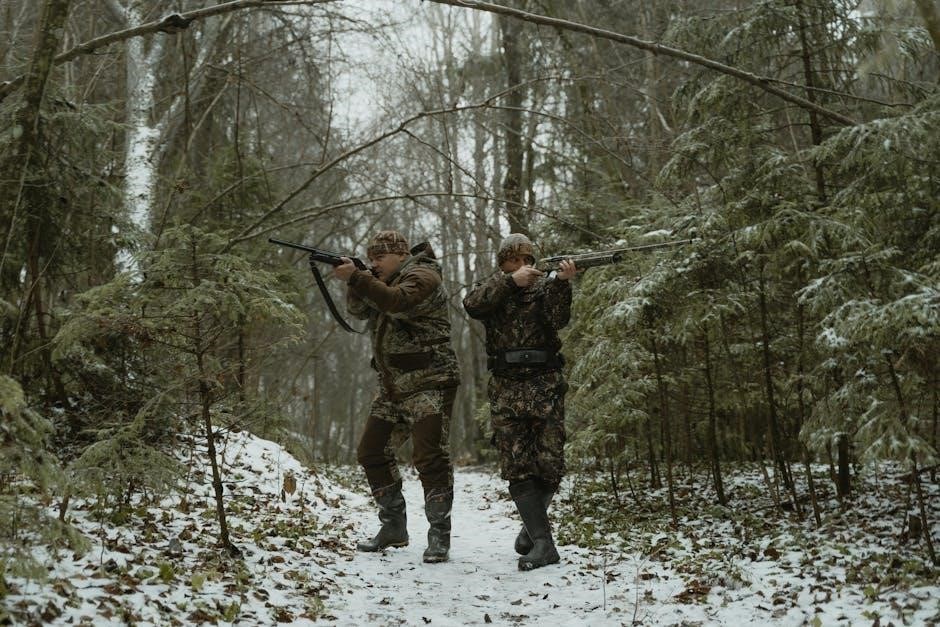
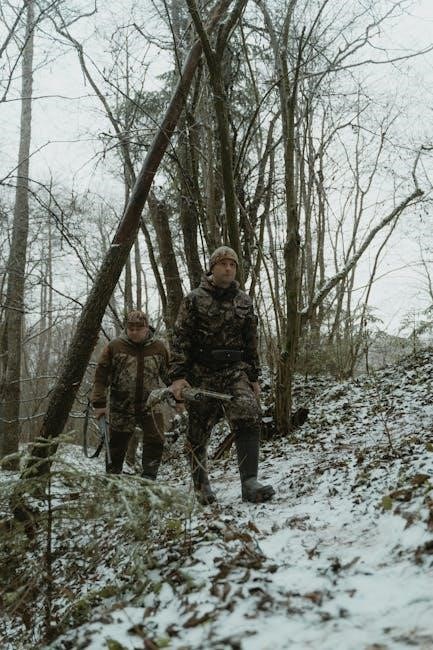
Bruegel’s depiction of the hunters’ return offers a detailed glimpse into 16th-century Flemish life. The painting showcases the daily routines, social structures, and economic realities of the period, portraying a community reliant on hunting for sustenance. The weary hunters, accompanied by their dogs, embody the physical demands and often meager rewards of this lifestyle.
The surrounding village scene, bustling with activity, provides further insight into the broader societal context. Details like the figures ice-skating and engaging in everyday tasks reveal a vibrant, albeit challenging, existence. Wolff’s story echoes this hardship, portraying unsuccessful hunts leading to tension.
The Role of the Landscape in Conveying Meaning
Bruegel’s landscape in “Hunters in the Snow” isn’t merely a backdrop; it’s integral to the painting’s meaning. The vast, snow-covered expanse evokes a sense of winter’s harshness and the challenges of survival, mirroring themes found in London’s “The Story of Keesh.” The distant mountains and frozen ponds create a feeling of isolation and the immensity of nature.
The downward sloping perspective draws the viewer into the scene, emphasizing the hunters’ arduous journey. The muted color palette reinforces the cold, bleak atmosphere. This landscape subtly foreshadows the potential for disappointment, a sentiment echoed in Wolff’s narrative of a fruitless hunt.
Artistic Techniques Employed by Bruegel
Bruegel masterfully utilizes several techniques in “Hunters in the Snow.” His meticulous detail, evident in the depiction of individual figures and the frozen landscape, creates a sense of realism. The high vantage point offers a panoramic view, allowing viewers to observe the scene as a whole. He employs a limited color palette, dominated by blues, browns, and whites, to convey the cold winter atmosphere.
Bruegel’s skillful use of perspective and composition guides the viewer’s eye throughout the painting. The subtle layering of elements adds depth and complexity. These techniques collectively contribute to the painting’s enduring appeal and its ability to evoke a powerful emotional response.
“Hunters in the Snow” in Modern Poetry: Ekphrasis
Modern poetry frequently engages with Bruegel’s “Hunters in the Snow” through ekphrasis – poetry inspired by visual art. These poetic responses delve into the painting’s themes of labor, winter, and human existence. The artwork’s detailed scenes provide rich material for poetic interpretation, prompting explorations of Flemish life and the cyclical nature of seasons.
Poets utilize imagery and symbolism drawn directly from the painting, re-contextualizing Bruegel’s vision within contemporary frameworks. This engagement demonstrates the painting’s continued relevance and its capacity to inspire artistic creation across different mediums, fostering dialogue between visual and literary arts.
Analyzing Ekphrastic Responses to Bruegel’s Work
Ekphrastic poems responding to “Hunters in the Snow” often focus on the painting’s subtle narratives and atmospheric details. Analysis reveals a common thread of interpreting the hunters’ return as symbolic of human struggle and the harsh realities of life. Poets frequently explore the contrast between the vast, indifferent landscape and the small figures engaged in their laborious tasks.
Furthermore, these poetic interpretations often grapple with the painting’s ambiguity, acknowledging the lack of a definitive narrative. The ekphrastic works demonstrate how Bruegel’s masterpiece continues to provoke contemplation and inspire diverse artistic responses, enriching our understanding of both the artwork and the poetic form.
The Influence of the Painting on Contemporary Poets
Contemporary poets continue to find inspiration in “Hunters in the Snow,” drawn to its depiction of Flemish life and the broader themes of labor, survival, and the passage of time. The painting’s detailed rendering of a winter landscape provides a rich visual source for evocative imagery and metaphorical exploration.
Notably, poets often engage with the painting’s ambiguity, using it as a springboard for exploring complex emotional states and philosophical questions. Ekphrastic responses demonstrate a sustained interest in Bruegel’s ability to capture both the beauty and the harshness of the natural world, influencing modern poetic sensibilities.
Tobias Wolff’s “Hunters in the Snow” – Narrative Overview
Wolff’s titular story, part of a collection, centers on three men embarking on a hunting trip during a frigid, snowy day. Their pursuit proves unsuccessful, leading to escalating tension and a surprising, violent climax. The narrative unfolds with a subtle, understated quality, demanding careful attention from the reader to fully grasp the dynamics at play.
Goodreads highlights the story’s complexity, noting that multiple readings are often required to appreciate the nuanced characterizations and underlying themes. It is a tale of disappointment, fractured relationships, and the quiet desperation of men grappling with their own shortcomings.
Character Analysis: The Three Hunters
Wolff’s story presents three distinct, yet interconnected, hunters whose personalities drive the narrative’s tension. The first, often seen as the leader, embodies a blustery arrogance masking deep insecurities. The second is quieter, more observant, and harbors a simmering resentment towards the first. The third, seemingly naive, serves as a catalyst for the story’s tragic events.
Goodreads reviewers emphasize the subtlety of these characters, noting that a deeper analysis is crucial to understanding their motivations. Their interactions reveal a complex web of competition, envy, and unspoken grievances, ultimately culminating in a shocking act of violence.
Themes of Violence and Disappointment in Wolff’s Story
Wolff’s “Hunters in the Snow” profoundly explores the themes of violence and disappointment, stemming from unmet expectations and suppressed frustrations. The unsuccessful hunt serves as a potent symbol of broader life failures, exacerbating the hunters’ pre-existing tensions. Goodreads highlights the story’s unexpected and violent conclusion, emphasizing its unsettling impact.
The narrative suggests that violence isn’t merely an outburst, but a consequence of accumulated disappointments and a desperate need to assert control. The story’s subtlety demands multiple readings to fully grasp the characters’ descent into brutality, revealing a bleak commentary on human nature.
Jack London’s “The Story of Keesh” – A Comparative Perspective
Comparing London’s “The Story of Keesh” with Bruegel’s painting and Wolff’s story reveals contrasting approaches to survival and hunting. Keesh, a young Inuit boy, demonstrates courage and resourcefulness in a harsh Arctic environment, challenging traditional hunting practices. The provided summary details his successful hunt, contrasting sharply with the failure experienced by Wolff’s characters.
While Bruegel’s hunters return empty-handed, and Wolff’s descent into violence, Keesh embodies resilience and ingenuity. The stories collectively explore the relationship between humans and the natural world, highlighting themes of skill, luck, and the consequences of both success and failure in the pursuit of sustenance.

Survival and Hunting in Arctic Environments
Jack London’s “The Story of Keesh” vividly portrays the brutal realities of survival in an Arctic landscape, where hunting is paramount. The narrative emphasizes the extreme conditions and the necessity of skill, bravery, and innovation to secure food and maintain life within the Inuit community. Keesh’s success hinges on understanding animal behavior and utilizing available resources effectively.
This contrasts with the more symbolic and observational hunting depicted in Bruegel’s painting, and the fraught, unsuccessful hunt in Wolff’s story. The Arctic environment demands respect and adaptation, themes central to London’s work, showcasing a direct confrontation with nature’s power.
Keesh as a Young Hunter: Courage and Resourcefulness
Keesh, a thirteen-year-old, challenges the established norms of his village by boldly asserting his hunting capabilities. Despite his youth and the skepticism of the elders, he demonstrates remarkable courage and resourcefulness in pursuing a bear—a feat considered dangerous even for experienced hunters. His innovative hunting techniques, deviating from traditional methods, highlight his intelligence and adaptability.
Keesh’s success isn’t merely about physical prowess; it’s a testament to his strategic thinking and willingness to take risks. This contrasts with the more passive or destructive hunting portrayed in other works, showcasing a proactive and respectful approach to the natural world, vital for survival.
The Significance of Snow as a Motif in Literature
Snow consistently functions as a powerful literary motif, extending beyond a simple weather element. It frequently symbolizes isolation, coldness, and the harsh realities of survival, mirroring the challenging environments faced by characters in narratives like Jack London’s “The Story of Keesh” and Bruegel’s “Hunters in the Snow.”
The motif often underscores themes of hardship and the struggle against nature’s forces. Furthermore, snow can represent purity or a blank slate, though this is less prominent in stories focused on the practicalities of hunting and the fight for existence. Its presence heightens the dramatic tension and emphasizes the vulnerability of life.
Snow as a Symbol of Isolation and Coldness
Within literature, snow powerfully embodies isolation and coldness, both physically and emotionally. Bruegel’s “Hunters in the Snow” depicts a bleak, winter landscape that visually reinforces this sense of detachment and hardship. Similarly, in Wolff’s story, the snowy setting amplifies the emotional distance between the hunters and their internal disappointments.
The coldness isn’t merely climatic; it reflects a chilling lack of connection and empathy. Snow can create barriers, both literal and figurative, separating individuals and fostering a sense of loneliness. This symbolic weight contributes to the overall mood of the narratives, emphasizing themes of alienation and the struggle for warmth—both physical and emotional.
Snow and the Hunting Experience: A Common Thread
Across diverse narratives, snow consistently intertwines with the hunting experience, shaping both the practical challenges and symbolic weight of the pursuit. Bruegel’s painting showcases hunters returning amidst a snowy expanse, highlighting the arduous nature of their task. Jack London’s “The Story of Keesh” centers entirely on a young hunter’s bravery in an Arctic, snow-laden environment.
The presence of snow elevates the stakes, demanding resourcefulness and courage. It serves as a backdrop for testing skill and resilience, while simultaneously representing the unforgiving power of nature. This common thread underscores the inherent connection between hunting, survival, and the harsh realities of a winter landscape.
Medical References: Hunter and Snow – Surgical Approaches
Historical medical practice reveals significant contributions from both Hunter and Snow regarding surgical oncology. John Hunter, in 1787, and later Henry Snow in 1892, emphasized the critical importance of complete regional lymph node removal alongside primary tumor excision. Snow specifically advocated for this approach, building upon Hunter’s foundational work.
This surgical tenet aimed to improve patient outcomes by addressing potential metastatic spread. W. Handley further supported these principles, solidifying the understanding of comprehensive surgical intervention in cancer treatment. These historical perspectives continue to influence modern surgical oncology practices today, highlighting the enduring legacy of these pioneers.
Hunter’s Emphasis on Lymph Node Removal
John Hunter, a prominent 18th-century surgeon, significantly stressed the necessity of thorough lymph node removal during cancer surgeries. His observations indicated that cancerous spread frequently occurred via lymphatic pathways, making complete removal crucial for effective treatment. Hunter’s approach wasn’t merely excision of the primary tumor; it involved a comprehensive understanding of disease progression.
He believed that failing to address regional lymph nodes risked leaving behind microscopic disease, ultimately leading to recurrence. This emphasis laid the groundwork for modern surgical oncology principles, influencing subsequent surgeons like Henry Snow and shaping contemporary cancer care protocols. Hunter’s insights remain remarkably relevant today.
Snow’s Contributions to Surgical Oncology
Henry Snow, building upon John Hunter’s foundational work, further solidified the importance of radical lymph node dissection in cancer surgery during the late 19th and early 20th centuries. Snow passionately advocated for complete removal of regional lymph nodes alongside the primary tumor, believing it essential for achieving long-term disease control.
His meticulous surgical techniques and detailed pathological examinations demonstrated the frequent presence of occult cancer cells within lymph nodes, even in the absence of palpable enlargement. Snow’s contributions significantly advanced surgical oncology, establishing a standard of care that continues to influence cancer treatment strategies today, emphasizing thoroughness and precision.
Opel Astra Timing Belt Kits – A Tangential Connection

While seemingly disparate, the search for resources related to “hunters in the snow pdf” often leads to diverse online marketplaces. These platforms, like Yandex Market, prominently feature automotive parts, including Opel Astra timing belt kits; This unexpected connection arises from common search algorithms and online retail categorization.
Kits are readily available for various Opel Astra models (1991-2025), encompassing different body styles. Purchasing options include installment plans and fast delivery. This illustrates how broad online searches can uncover unrelated products alongside the initially intended subject matter, highlighting the interconnectedness of the digital landscape.
Availability and Purchasing Options for Opel Astra Parts
The digital pursuit of “hunters in the snow pdf” frequently intersects with online automotive parts retailers. Platforms like Yandex Market showcase over 1449 Opel Astra parts, including timing belt kits, readily available for purchase. These options cater to models spanning 1991 to 2025, encompassing diverse body styles like convertibles.
Buyers benefit from detailed product information, customer reviews, and convenient purchasing features. Options include installment payments, facilitating accessibility, and swift delivery services. This unexpected link demonstrates how search algorithms connect seemingly unrelated topics, driven by commercial interests and online retail ecosystems.
Relevance to Vehicle Maintenance and Winter Conditions
The search for “hunters in the snow pdf” surprisingly leads to Opel Astra parts, specifically timing belt kits, highlighting a practical connection to winter preparedness. Maintaining vehicle functionality is crucial during colder months, mirroring the harsh conditions depicted in Bruegel’s painting and London’s story.
Reliable vehicle operation, especially the timing belt, ensures safe travel in snowy environments. Purchasing these parts online, as offered on Yandex Market, provides convenience. Proper maintenance prevents breakdowns, echoing the survival themes present in both literary works and the demands of winter landscapes.